Basement Waterproofing Mistakes Homeowners Should Avoid
A dry basement is easy to take for granted until it is not. One heavy storm, one clogged downspout, one hairline crack that quietly widened over three winters, and suddenly the lower level smells musty, boxes are ruined, and the walls tell a story the house has been trying to whisper for years.
Most basement water problems do not begin with dramatic flooding. They begin with small decisions and small oversights. A homeowner notices a damp corner and paints over it. Another sees a little efflorescence on the wall and assumes it is cosmetic. Someone else spends thousands on an interior drain system without ever addressing the grading outside. The common thread is not carelessness so much as misplaced confidence. Basement waterproofing looks simple from a distance. In practice, it is one of those areas where partial fixes often waste the most money.
The reason is straightforward. Water is persistent, and houses are full of weak points. It follows gravity, seeks pressure relief, slips through capillary pores in concrete, rides along utility penetrations, and builds hydrostatic force against foundation walls. If the diagnosis is wrong, the repair usually fails. If the repair is incomplete, the water finds the next opening.
Homeowners do not need to become foundation engineers to make smart decisions, but they do need to understand the mistakes that repeatedly cause trouble. These are the ones I see most often, and they tend to repeat across old homes, newer builds, finished basements, and homes that have never had a serious leak until suddenly they do.
Treating the symptom instead of the source
This is the mistake that drives most of the others. Water stains on a basement wall, damp carpeting, peeling paint, and moldy baseboards are symptoms. They are not the problem. The problem is the path water is taking to get there.
A homeowner may see a wet section of wall and assume the wall itself has failed. Sometimes that is true. Often it is not. The water may be entering at the cove joint where the slab meets the wall, then wicking upward. It may be spilling out of a clogged window well. It may be coming from a disconnected downspout elbow six feet away. It may not even be groundwater. I have seen basement "leaks" caused by sweating ductwork, an uninsulated cold-water line, and a tiny plumbing drip hidden behind drywall.
The temptation is to fix what is visible. That is how people end up sealing one crack when the true issue is poor surface drainage around half the house. It is also how they pay to replace flooring twice.
A proper basement waterproofing approach starts with tracing the moisture. When does the basement get wet, after steady rain, during snowmelt, only in summer, only after a fast downpour? Is the moisture on the wall, under the floor, or in the air? Is it isolated to one side of the house? Those questions matter. A basement that gets damp during humid July weather needs a different solution than one that takes on water every time the sump pump loses power in March.
Assuming waterproof paint is a waterproofing system
This product category causes more false confidence than almost any other. Masonry coatings and so-called waterproof paints can be useful in limited situations. They can improve appearance, slow minor vapor transmission, and make unfinished walls easier to keep clean. What they cannot do is stop active water intrusion under pressure.
Concrete and block foundations are porous. If water is building up in the soil outside, pressure pushes it through cracks, tie holes, mortar joints, and pores. A coating on the interior face of the wall is trying to resist that pressure from the wrong side. Sometimes it holds for a while. Often it blisters, flakes, or simply redirects the water to another spot.
I have walked through basements where the freshly painted walls looked neat and bright, while the base of the wall behind storage shelves was still wet enough to leave a dark line on the slab. The paint did not solve anything. It delayed an honest diagnosis.
That does not mean coatings are always useless. If a basement has a slight vapor issue, no standing water, good exterior drainage, and intact walls, an appropriate coating can be part of a broader moisture management plan. The mistake is treating a finish product like a structural or drainage solution.
Ignoring the ground outside the house
Many wet basements are created outdoors. A surprising number of homeowners spend money below grade without ever correcting the simplest issue above grade: water is being directed toward the house instead of away from it.
Soil should slope away from the foundation, but over time it settles. Mulch beds get built up. Walkways sink. Decorative edging traps runoff. Then rainwater pools along the foundation wall, exactly where you do not want it. Add a roof valley dumping into a short downspout, and the ground beside the house can receive hundreds of gallons in a single storm.
The house may have been fine for years before these conditions added up. That is what confuses people. They think, "We have lived here eight years and never had a problem." Then one wetter-than-usual season exposes the cumulative effect of neglected grading and drainage.
This is why exterior inspection matters so much in basement waterproofing. Before anyone opens walls or installs channels in concrete, look at the roof runoff, downspout extensions, grading, settlement patterns, and hardscape pitch. These are not glamorous fixes, but they solve a large share of basement water problems.
Underestimating gutters and downspouts
Gutters are easy to dismiss because they sit high above the basement, out of sight from the problem area. In practice, they are often the first system to evaluate. If gutters overflow or dump water too close to the foundation, they can saturate the soil beside the house very quickly.
Picture a 2,000 square foot roof during a one-inch rain. That roof sheds roughly 1,200 gallons of water. If even part of that volume pours next to the foundation because of clogged gutters or short downspout discharge, the basement is being asked to withstand a lot more than normal damp soil.
Homeowners sometimes clean the gutters and assume the issue is solved. Sometimes it is. Sometimes the gutters are undersized, badly pitched, or missing extensions long enough to carry water several feet away. Splash blocks help a little on ideal terrain, but they are often not enough on compacted soil, short lot lines, or properties with negative grade.
The important point is that a basement leak can start on the roof. That is not intuitive, which is why it gets missed.
Sealing cracks without asking why they formed
Foundation cracks are common, and not every crack is a structural emergency. Shrinkage cracks in poured concrete can be narrow and stable for years. A stepped crack in block, a horizontal crack under pressure, or a https://garrettdmyd345.bearsfanteamshop.com/how-to-stop-recurring-seepage-with-basement-waterproofing crack that has shifted in and out of plane is a different conversation.
The mistake is not sealing a crack. The mistake is sealing it blindly.
If the crack is simply a minor shrinkage crack and it is allowing seepage, an appropriate injection repair may work well. If the crack exists because the footing is settling, because expansive clay is moving seasonally, or because the exterior drainage is creating repeated pressure against the wall, then the repair needs a broader strategy. Otherwise the same stress that opened the crack the first time may reopen it or create a new crack a foot away.
A homeowner once described a wall crack as "fixed three times." That phrase usually means it was never fixed once in the true sense. It was filled three times. That is not the same thing.
Installing an interior system when an exterior repair is the real answer
Interior drainage systems, sump pumps, vapor barriers, and drainage channels have a legitimate place. In some homes they are the most practical answer, especially where full excavation outside would be disruptive, prohibitively expensive, or risky because of lot constraints. But interior systems are often misunderstood.
An interior drain system usually manages water after it has already entered or reached the foundation wall. It relieves pressure and controls the water path inside the basement envelope. That can keep the space dry and usable. What it often does not do is prevent the wall from remaining wet on the exterior side. If the foundation itself is deteriorating, if the wall coating outside has failed, or if the goal is to preserve a finished living space with minimal moisture exposure, then exterior waterproofing may be the better long-term fix.
There is a trade-off here. Exterior excavation is more invasive and more expensive in many cases. It can involve landscaping, porches, decks, utilities, and access challenges. Interior systems are faster and may cost less upfront. Neither approach is automatically superior. The mistake is assuming they are interchangeable.
A good contractor explains what a system does and does not do. If someone presents an interior channel and pump as if it magically waterproofs the wall itself, ask harder questions.
Forgetting the basement air matters too
Not every moisture problem is liquid water entering through the foundation. Some basements are technically "dry" from a leakage standpoint and still feel damp, smell stale, and support mold growth because humidity is too high.
Cool surfaces in basements attract condensation. During humid months, warm air entering from upstairs, from open windows, or from leaky ductwork can condense on pipes, slab floors, or lower wall sections. The homeowner sees moisture and assumes a leak. Then they spend money chasing a phantom foundation problem while ignoring the dehumidifier the space clearly needs.
This is especially common in finished basements, where carpeting, drywall, and stored belongings trap moisture and mask the distinction between liquid intrusion and airborne humidity. The answer may involve air sealing, insulation, HVAC balancing, or a dedicated dehumidifier sized for the square footage and moisture load.
A healthy basement often depends on both waterproofing and humidity control. One without the other can leave the space technically dry and still unpleasant.
Finishing the basement before the water problem is truly resolved
This is one of the costliest mistakes because the consequences multiply. Once drywall, insulation, trim, flooring, cabinetry, and furniture go into the basement, even a minor leak becomes a major event.
People sometimes rush to finish a basement after a repair because the space has been dry for a few weeks or a few months. That is not enough evidence. Basement waterproofing should prove itself over time, ideally through wet seasons and varying conditions. If there is any doubt, it is smarter to wait than to close the walls and hope.
Finished basements also change the risk profile. Materials matter. Organic materials, especially paper-faced drywall, MDF trim, and plush carpet with thick pad, are unforgiving when water shows up. In a basement with any history of moisture, choices should lean toward resilience. That may mean rigid foam instead of fibrous insulation against foundation walls, tile or luxury vinyl rather than wall-to-wall carpet, and details that allow inspection and drying.
There is no universal rule that says a previously wet basement can never be finished. Plenty can. The point is that finishing should follow confidence in the moisture control plan, not substitute for it.
Choosing a contractor based on the loudest promise
Waterproofing is a field where marketing can easily outrun craftsmanship. Homeowners under stress are vulnerable to bold claims, lifetime guarantees with fine print, and one-size-fits-all sales scripts.
The problem is not only dishonesty. It is oversimplification. Some companies are built to sell one system, so every basement gets diagnosed as needing that system. If a business specializes only in crack injections, every problem can start to look like a crack problem. If another sells interior drain systems, grading and exterior membrane failures may receive less attention than they deserve.
A solid contractor inspects broadly and talks specifically. They ask about timing, previous repairs, seasonal patterns, and site conditions. They explain whether the issue is bulk water, seepage, hydrostatic pressure, vapor transmission, or humidity. They can discuss why one repair is appropriate and why another may be unnecessary.
When evaluating estimates, pay attention to what is missing as much as what is included. If nobody has mentioned gutters, discharge points, grading, window wells, or sump discharge location, that is a red flag.
Here are a few signs a homeowner is getting useful guidance rather than a sales pitch:
- The inspection includes both the basement and the exterior around the foundation.
- The contractor explains the water path, not just the product they want to sell.
- The proposal states what problem is being solved and what limitations remain.
- The warranty terms are clear about coverage, exclusions, and transferability.
- The recommendation fits the house, even if it is less expensive than the biggest package offered.
That short list will not guarantee a perfect hire, but it filters out a lot of noise.
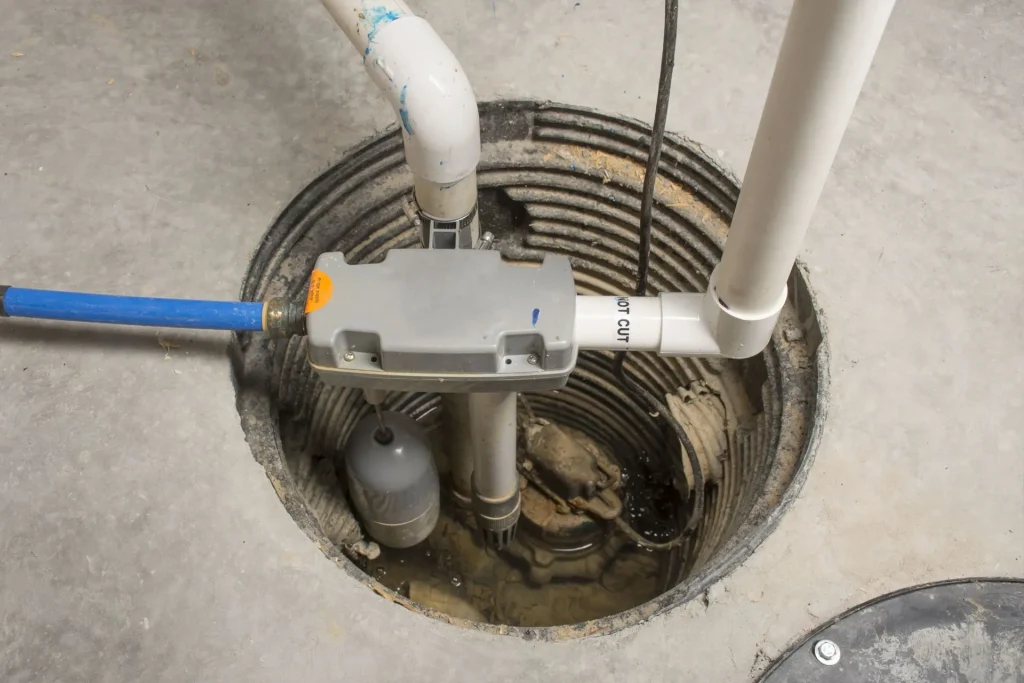
Overlooking sump pump details
A sump pump can save a basement, but only if the rest of the system supports it. Homeowners often focus on the pump itself and ignore the details that determine whether it performs when needed.
Discharge location matters. If the pump sends water only a few feet from the foundation, the system may be recycling water back toward the house. If the discharge line freezes in winter, the pump may run against a blockage. If there is no battery backup in an area prone to storms and outages, the pump is most likely to fail at the exact moment demand peaks.
The basin setup matters too. A poorly fitted lid can let humidity and odors escape. A switch can snag on the side of the pit. Sediment can shorten pump life. None of this is dramatic until the night it becomes very dramatic.
Sump systems should be checked, tested, and understood. Homeowners do not need to become mechanics, but they should know where the discharge goes, whether there is backup power, and what signs suggest trouble.
Missing the role of window wells and penetrations
Basement windows, utility entries, hose bibs, conduit penetrations, and service lines create interruptions in the foundation envelope. They are common leak points, and they often get ignored because they appear too small to matter.
A window well that fills with leaves and silt can hold water against the window frame. A cracked seal around an electrical conduit can let in seepage during hard rain. An old pipe penetration may have lost its seal entirely. These are localized problems, but localized problems can ruin finished walls just as effectively as a broader drainage issue.
What makes them tricky is that they may only leak under very specific conditions, such as wind-driven rain from one direction or rapid snowmelt when the soil is still frozen. That intermittent behavior leads people to doubt what they are seeing. Then the leak returns months later, usually after the wall has already been patched and repainted.
Waiting too long because the leak seems minor
Basement moisture rarely improves on its own. It usually stays the same for a while, then gets worse after a heavier storm, a blocked gutter, another freeze-thaw cycle, or one more season of soil movement.
A tiny leak can also hide larger consequences. Repeated wetting raises indoor humidity. Humidity supports mold growth. Moisture can rot wood framing near the sill, corrode metal components, damage stored contents, and attract insects. If the water path reaches electrical systems, the stakes rise further.
One of the harder judgment calls for homeowners is deciding when "a little water" justifies action. My rule of thumb is simple. If water is entering the basement as liquid, if materials stay damp for more than a day or two, if there is a recurring odor, or if the issue has happened more than once, it deserves a serious look. Early repairs are not always cheap, but they are usually cheaper than delayed repairs combined with interior restoration.
What careful homeowners usually do right
The homeowners who avoid major waterproofing regrets tend to share a few habits. They observe before they buy. They pay attention to timing and patterns. They check the easy exterior issues first. They are skeptical of miracle coatings and universal solutions. Most of all, they want a diagnosis before they want a product.
That mindset matters because basement waterproofing is not one repair. It is a chain of decisions involving drainage, structure, materials, air movement, maintenance, and realistic expectations. Sometimes the right answer is as simple as extending downspouts and regrading soil. Sometimes it is a larger project involving excavation, membranes, drainage board, footing drains, and pump upgrades. The important thing is matching the remedy to the actual problem.
If your basement has shown signs of moisture, the best next step is rarely the most dramatic one. It is the most informed one. Walk the exterior after a hard rain. Look for pooling water, overflowing gutters, and soil that pitches the wrong way. Check window wells, sump discharge, and the history of previous repairs. Inside, note where moisture appears and under what conditions. Those observations often reveal more than a rushed estimate ever will.
A dry basement is not the result of luck. It is usually the result of understanding how water behaves around a house, then respecting that behavior enough to fix the right thing the first time.
ARD Waterproofing
98 Smull Ave, West Caldwell, NJ 07006, United States
+1 917-691-8411
FAQ About Basement Waterproofing
Can you 100% Waterproof a Basement in West Caldwell?
A properly designed system can substantially reduce basement water intrusion, but no method can promise protection against every flood, equipment failure, or future change in site conditions. The first step is identifying whether moisture comes from surface runoff, groundwater, plumbing, or condensation. Solutions may include grading and gutter improvements, drainage, foundation repairs, and a sump system. Review the specific coverage and exclusions of any written warranty.
How much does it cost to professionally waterproof a basement in NJ?
There is no single price that fits every basement. Cost depends on the cause of the leak, the area needing work, access, excavation requirements, drainage design, sump equipment, and restoration of disturbed finishes or landscaping. Request an on-site assessment and an itemized written estimate that explains the scope, exclusions, and maintenance requirements before comparing proposals.
How long does foundation waterproofing last in West Caldwell, NJ?
Service life varies with the waterproofing materials, installation quality, soil and water conditions, and maintenance. Drainage components and pumps may require servicing or replacement even when other parts of the system remain functional. Keep gutters, drainage outlets, and sump equipment maintained, and have recurring leaks or changes in foundation condition assessed. Ask for product-specific expectations and written warranty terms rather than relying on one lifespan for the entire system.